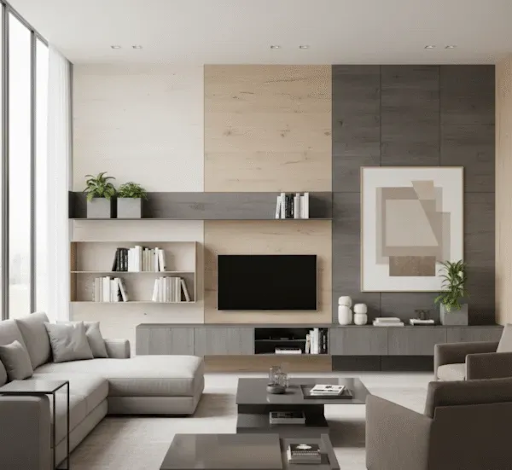
Laminate surfaces have evolved from practical finishing materials into versatile design solutions for residential, commercial, hospitality, and workplace interiors. Modern options combine decorative flexibility with durability and easier maintenance.
As architects and designers explore new surface possibilities, material selection increasingly considers appearance, performance, application, and long-term usability. Virgo Group embodies this evolving approach by offering laminate and surface solutions that balance creative possibilities with practical performance across diverse project requirements.
Design Possibilities Shaping Modern Laminate Surfaces
Modern laminate surfaces offer flexibility in color, texture, pattern, and finish, allowing designers to create distinctive interiors without compromising everyday usability.
1. Expanding Color and Pattern Choices
Laminate surfaces provide designers with extensive opportunities to introduce color, patterns, textures, and decorative effects into interiors. Options inspired by wood, stone, metal, solid colors, and contemporary patterns can complement different architectural concepts. This flexibility allows the same material category to support minimalist, traditional, industrial, or modern aesthetics. Designers can coordinate surfaces across furniture, wall panels, cabinets, and other applications while maintaining visual consistency. Such variety also makes laminates useful when projects require a particular appearance without relying exclusively on natural materials.
2. Creating Distinctive Surface Finishes
Surface finish can significantly influence how a laminate looks and feels within an interior. Matte, glossy, textured, and specialty finishes can create different visual effects while contributing to the character of furniture and architectural surfaces. Designers can select finishes according to the atmosphere they want to establish, whether understated and refined or bold and decorative. The choice should also consider the intended application, maintenance requirements, lighting conditions, and expected level of daily use. A thoughtful finish can improve both visual appeal and practical suitability.
3. Supporting Flexible Interior Applications
Laminate surfaces can be incorporated into a wide range of interior applications, including furniture, cabinetry, wall surfaces, counters, partitions, and decorative elements. Their adaptability allows designers to maintain a consistent design language across different parts of a project. Using coordinated finishes can help connect individual areas while creating a more unified appearance. Application requirements should still be considered carefully, including substrate compatibility, installation conditions, thickness, edge treatment, and expected exposure. Matching the laminate specification to the application supports better long-term performance.
4. Balancing Aesthetics With Practicality
Good surface design needs to combine appearance with everyday functionality. Interiors experience regular contact, cleaning, movement, and occasional impact, making durability an important consideration alongside visual appeal. Laminate selection can therefore involve reviewing resistance requirements, maintenance expectations, surface characteristics, and installation conditions. Choosing a suitable material helps reduce the possibility of premature wear while allowing designers to achieve their preferred aesthetic. This balance is particularly relevant for high-use environments where surfaces must remain attractive while handling regular daily activity.
Performance Considerations for High Pressure Laminate Supplier
Performance requirements influence laminate selection, particularly when surfaces must withstand regular use, cleaning, moisture exposure, and changing environmental conditions.
Choosing a high-pressure laminate supplier involves more than comparing colors and catalog designs. Project teams may need to review thickness, surface finish, intended application, durability requirements, quality consistency, technical specifications, and available support. A suitable supplier should provide clear product information that helps architects, contractors, fabricators, and designers select materials according to project needs. Consistency between batches can also be important when larger projects require multiple sheets or coordinated surfaces. Evaluating both design and performance characteristics creates a stronger foundation for material selection.
Material Selection Supporting Long-Term Surface Value
The right laminate can contribute to attractive interiors while supporting practical requirements throughout the useful life of a project.
1. Considering Durability Requirements
Different environments place different demands on surface materials. Residential furniture may experience regular handling, while offices, hospitality spaces, healthcare environments, and public areas can experience significantly higher levels of daily activity. Selecting laminates according to expected use can help improve long-term suitability. Factors such as scratch resistance, impact resistance, moisture exposure, cleaning frequency, and surface finish should be reviewed before specification. A material selected for the actual environment is more likely to provide dependable performance while maintaining its intended appearance over time.
2. Reviewing Moisture and Cleaning Needs
Moisture and frequent cleaning can influence the suitability of surface materials in kitchens, bathrooms, hospitality spaces, and other demanding environments. Laminates designed for appropriate applications can provide practical surface solutions where regular cleaning is expected. Designers should still consider installation details, substrate conditions, edge treatment, and manufacturer recommendations. Choosing materials based on the actual environment helps reduce maintenance concerns and supports consistent performance. Clear care instructions can further help users preserve the appearance and usability of finished surfaces.
3. Evaluating Thickness and Construction
Thickness is an important specification when selecting laminate for a particular project. Different applications may require different thicknesses depending on installation methods, substrate conditions, impact expectations, and design requirements. Thicker options may be appropriate where additional strength or durability is required, while other applications may call for different specifications. Reviewing technical information before purchase helps ensure the chosen product matches the intended use. Accurate specification can also simplify fabrication and installation by reducing compatibility issues during project execution.
4. Maintaining Design Consistency
Large projects often require surfaces across multiple rooms or applications, making consistency an important consideration. Designers may need matching colours, textures, patterns, or finishes across different elements. Reliable product documentation and consistent manufacturing can support easier coordination during specification and installation. Sample evaluation can also help teams understand how a particular finish appears under actual project lighting. Maintaining visual consistency contributes to a more cohesive interior while reducing unexpected differences between surfaces used in different areas.
Conclusion: Choosing Reliable Laminate Surface Solutions
The evolution of laminate surfaces demonstrates how modern materials can combine creative freedom, practical performance, and adaptable applications. Careful consideration of design, durability, finish, thickness, maintenance, and project requirements helps create more effective surface solutions.
For architects, designers, contractors, and fabricators seeking dependable options, laminate sheet manufacturers play an important role in providing materials suited to different applications and design concepts. Virgo Group offers high-pressure laminates, compact surfaces, decorative solutions, and other surface products designed for a range of architectural requirements. Their product portfolio combines decorative flexibility with performance-focused surface solutions, supporting residential and commercial applications where both appearance and usability matter.