Hoodies survive in a closet longer than almost any other piece of clothing, which puts a different kind of pressure on a custom design than a t-shirt does. A shirt might get worn to one event and set aside, but a good hoodie becomes a daily-rotation piece — worn to class, thrown on for errands, packed for a trip — which means the fabric, fit, and print all need to hold up to far more wear than a typical event tee.
Fabric Weight Sets the Tone
Fabric weight is the starting point for almost every hoodie decision that follows. Fleece is measured in ounces per square yard, and that number tells you a lot about how the finished piece will feel and perform.
- Lighter fleece, somewhere around 7 to 9 ounces, works well for warmer climates or layering pieces that won’t feel bulky under a jacket.
- Heavier fleece in the 10-ounce-plus range gives a substantial, cold-weather feel that holds its shape better over repeated washes, which matters for anything meant to last multiple seasons rather than one.
- Cotton-poly blends are the norm because pure cotton fleece, while soft, tends to shrink more and pill faster, while a blend keeps that soft hand feel while resisting wear better over time.
Pullover vs. Zip-Up: Choosing a Construction Style
Construction style changes both comfort and how a design gets placed. Pullover hoodies offer a larger, uninterrupted front surface, which makes them the better choice for a bold chest graphic or a full front print. Zip-up hoodies split that front space down the middle, which pushes most designs toward the back panel, a smaller left-chest placement, or a design built specifically to work around the zipper line. Neither style is more “correct,” but the choice absolutely should happen before finalizing artwork, since a design built for a pullover’s open canvas often needs real rework to translate onto a zip style.
Printing Methods for Heavier Fabric
Print method matters even more on hoodies than on lighter garments because the surface texture of fleece behaves differently than a smooth cotton tee.
- Screen printing remains dependable here, laying down opaque color that reads clearly even against fleece’s slightly textured surface, and it scales well for bulk orders like team hoodies or event merchandise.
- Embroidery works especially well on hoodies because the thicker fabric supports dense stitching without puckering the way a thin tee sometimes does, making it a strong choice for a clean, compact logo on the chest or sleeve.
- DTG printing can work on hoodies too, though it performs best on a smoother, tighter-knit fleece rather than a heavily brushed or textured one, since a rougher surface can make fine detail look less crisp.
Planning Your Layout Before You Design
Anyone who wants to actually design your own hoodie from the ground up should start by deciding on pullover versus zip before touching artwork, then build the design around that structure rather than the other way around. Working through the layout digitally first — checking how a design sits relative to the hood seam, front pocket, and drawstrings — catches placement issues that are much harder to fix once a design is already approved for print.
Hood, Pocket, and Ribbing Details
Hood and pocket details are easy to overlook but affect both comfort and print placement.
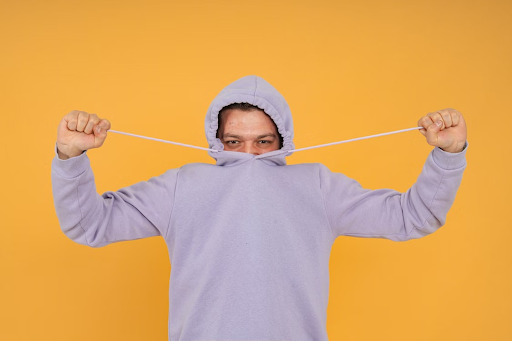
- A lined hood with drawstrings adds structure and a slightly more premium feel, while an unlined hood keeps things lighter and more casual.
- The kangaroo pocket on a pullover hoodie interrupts the lower front panel, which matters if a design was meant to run the full length of the shirt rather than stopping above the pocket line.
- Cuff and waistband ribbing also play a role in how the finished hoodie fits — tighter ribbing pulls the hem in for a more fitted, structured silhouette, while looser ribbing gives a relaxed, broken-in feel from the first wear.
These details seem small individually but add up to a noticeably different finished product.
Sizing and Everyday Versatility
Custom printed hoodies show up everywhere from college campuses to corporate offices to small event merch tables, and the reason they work across such different settings is that a hoodie reads as genuinely wearable rather than purely promotional. A hoodie with a well-placed design gets worn on its own merits, not just because it was free or given out at an event, which makes it one of the more effective pieces of branded apparel for actually keeping a design in circulation long-term. Sizing runs a little differently for hoodies than for tees because the extra fabric layers and front pocket add bulk that a size chart built for t-shirts doesn’t account for. Ordering a size up from a typical tee size is common practice for anyone wanting a slightly roomier, layerable fit, while true-to-size works fine for anyone planning to wear the hoodie as a standalone piece rather than over another layer.
Getting a custom hoodie right is really about respecting how differently it gets used compared to lighter apparel. Fabric weight, construction style, and print placement all need to account for a garment that’s going to be worn constantly across an entire season, and that extra bit of planning upfront is what keeps a hoodie in someone’s regular rotation instead of the donation pile.