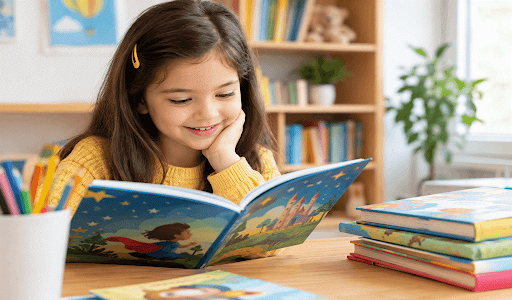
When you are publishing a children’s book, it is not only about to find someone willing to print your manuscript. It is important to choose the right publishing partner, as they can influence everything from your editing and artwork to distribution and rights. They also help you to how easily your story reaches young readers. It takes time and research to choose wisely with so many traditional and service-based options in the USA. This blog will guide you on how to separate a genuine publishing opportunity from an expensive arrangement that may leave you doing everything yourself.
What Should You Look For In A Children’s Book Publisher?
The best match for your children’s book publishing depends on your manuscript, budget, publishing goals and desired level of creative control. You should start by looking beyond impressive websites and promises.
● Check The Publishing Model
You should first identify whether you want to consider a traditional publisher, independent press, hybrid publisher or self-publishing provider. All of these models work differently. IBPA differentiates hybrid children publishers from service providers with offerings of the standards such as submission vetting, professional production, distribution and demonstrable sales.
● Study The Existing Children’s Catalogue
Now you need to read several books that the company has already released. Must look that ere they genuinely aimed at your age group? You should also check that their entire process from writing to editing and physical production looks professional. Choose a publisher who is experienced with picture books as they may understand pacing and page turns far better than a company that is focused mainly on adult nonfiction. This specialization is also crucial for choosing the right one.
● Examine Editorial Support
You should ask the company about who will edit your manuscript and what kind of editing is included. It can be developmental editing, proofreading, copyediting and educational review and all of them are different services. The publisher will explain the process instead of simply promising that your manuscript will be polished if they are serious.
● Investigate Illustration And Production Quality
Artwork is itself a part of the storytelling for picture books. You should ensure you ask who will choose the artist and how revisions work. Ensure you know about the owner of the artwork and whether you can approve the final visual direction. Professional children book illustration services will provide you a clear workflow instead of treating illustrations as an afterthought.
● Read The Contract
You should never judge an offer by royalty percentage alone, but you should examine the grant of rights, territory, contract term, subsidiary rights, termination clauses, formats, royalty calculation, accounting schedule and rights reversion. It is noted that rights grants can define what an author will give a publisher and should clearly establish their limits like territory, term and formats.
● Verify Distribution And Sales Claims
If you get the tag of “Available on Amazon”, it is not the same as meaningful distribution. You must ask where they will actually sell the book and whether the publisher works with wholesalers, libraries, bookstores, schools or speciality retailers. The current criteria of IBPA specifically expect reputable hybrid publishers to provide distribution and demonstrate respectable sales in their niche.
What Are The Steps To Choosing A Publisher?
You need to slow down once you have shortlisted some of the publishers. It is better to compare companies not with sales language, but with the use of evidence, testimonials alone, or promises of bestseller status.
1. Define Your Publishing Goals
You should decide what your priority is. It can be bookstore reach, creative control, educational sales, income, speed or building a long-term series. Your answer can help you immediately narrow the field.
2. Compare Total Costs
You must create a simple comparison of upfront fees, artwork, marketing, editing, printing, distribution and author-copy costs. If you get a low initial quote, it may become expensive once extras appear. A company that sells children book publishing services, you should ask them exactly what is included before signing anything.
3. Ask About Marketing
Now you need to find out what the publisher actually handles after launch. Will it pitch librarians, submit to reviewers, arrange publicity, run advertising or coordinate school outreach? Some companies are also offering marketing services, but they still need to write responsibilities into the agreement.
4. Request Comparable Examples
You should ask for recent titles that are similar to yours and study their retail presence. Must look at publication dates, formats, reviews, pricing and where they are available. Comparable evidence can tell you more than a general claim about success.
5. Check Rights And Ownership
You must clarify who owns the copyright, illustrations, ISBN, files and subsidiary rights. It is better to pay particular attention to every element from audio and translation to merchandising and foreign rights. The Authors Guild emphasises that you can negotiate these rights and limit them by territory, format, language and term.
6. Evaluate The Visual Package
The cover quality that the publisher is providing can strongly affect the first impression of a book. You must ask about the cover creator, approver and how they handle revisions. If they are offering children book cover design services, you should review previous covers instead of accepting a generic portfolio.
Why Does The Publisher’s Audience Matter?
A children’s publisher doesn’t just need to understand books, but they should understand children, teachers, parents, librarians and the people who purchase books.
A recent report says 70% of children ages 6–17 report that a book has helped them and 90% of parents say books can create opportunities for conversation. This can make audience knowledge especially important when they are assessing a publisher’s editorial and sales strategy.
You should look for evidence that the company understands age categories, classroom use, reading levels, library buying and parent preferences. Children book marketing services are more valuable who can explain who will buy your book and why it is giving you something instead of vague exposure promises.
Frequently Asked Questions
1. How much will it cost me to publish a children’s book?
Costs of book publishing depend on editing, design, distribution, illustration, printing and marketing. Traditional publishers generally do not demand standard production fees from authors, but hybrid and service models do. You should always request a complete written cost breakdown before they agree.
2. What royalty percentage should I expect as an author?
There is no fixed royalty for an author. The royalties you get are given according to publisher, sales channel, format and contract structure. It is noted that traditional royalty rates vary widely and reputable hybrid publishers generally provide higher royalties in exchange for author investment.
3. How to spot a questionable publishing company?
You must be cautious when a company makes guaranteed bestseller claims, hides costs, pressures you to sign quickly, avoids clear contracts or cannot explain distribution and rights. Ensure you ask for comparable published titles and have an experienced publishing professional or attorney who can help you review the agreement.
Final Thoughts
When it comes to choosing a children’s book publisher, it is ultimately an exercise in due diligence. You should study the publishing model, editorial process, distribution, contract, catalogue, production quality, rights and marketing responsibilities before committing. Current industry guidance makes transparency and professional standards especially important, particularly when money changes hands. Your manuscript deserves a partner whose capabilities match your goals.