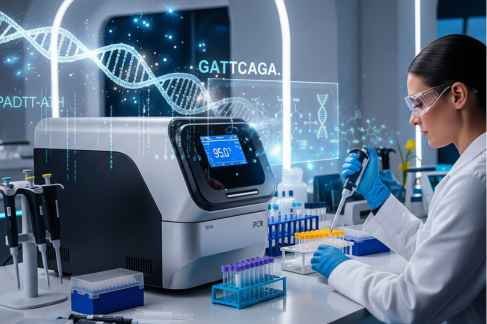
The Polymerase Chain Reaction (PCR) is one of the most transformative techniques in molecular biology, enabling the rapid amplification of specific DNA sequences. Polymerase Chain Reaction kits have made this technology highly standardized, efficient, and widely accessible across laboratories worldwide. Among these, the Polymerase Chain Reaction kit for genetic testing has become especially important in modern diagnostics, research, and clinical decision-making.
PCR kits typically contain essential components such as DNA polymerase enzymes, primers, nucleotides, and optimized buffers. These ready-to-use systems reduce technical errors and improve reproducibility, making genetic analysis faster and more reliable.
Clinical Diagnostics and Infectious Disease Detection
One of the most important applications of PCR kits is in clinical diagnostics. PCR enables the detection of minute quantities of genetic material from pathogens such as bacteria, viruses, and parasites. This makes it invaluable for early diagnosis of infectious diseases like tuberculosis, hepatitis, influenza, and COVID-19.
Real-time PCR (qPCR) kits further enhance this capability by quantifying pathogen load in patient samples, allowing clinicians to monitor disease progression and treatment effectiveness. The high sensitivity and specificity of PCR reduce false negatives, making it a gold standard in modern diagnostic laboratories.
Genetic Disorders and Prenatal Screening
PCR kits are widely used in identifying genetic mutations responsible for inherited disorders. Conditions such as cystic fibrosis, sickle cell anemia, and thalassemia can be diagnosed by analyzing specific gene sequences.
In prenatal screening, PCR-based methods help detect chromosomal abnormalities and genetic defects early in pregnancy. This allows healthcare providers and parents to make informed decisions regarding pregnancy management. The ability to perform rapid and accurate genetic testing has significantly improved preventive healthcare strategies.
Forensic Science and DNA Profiling
PCR plays a crucial role in forensic science, particularly in DNA fingerprinting. Even extremely small or degraded biological samples—such as hair, saliva, or blood traces—can be amplified using PCR kits to generate sufficient DNA for analysis.
Law enforcement agencies use PCR-based genetic profiling to identify suspects, confirm biological relationships, and solve criminal cases. The technique’s high precision has revolutionized forensic investigations, making it a cornerstone of modern criminal justice systems.
Cancer Research and Oncology Applications
In oncology, PCR kits are used to detect genetic mutations associated with cancer development and progression. Researchers analyze oncogenes and tumor suppressor genes to understand how cancers arise and evolve.
PCR-based assays also help in monitoring minimal residual disease in cancer patients, ensuring that treatment effectiveness is closely tracked. Additionally, liquid biopsy techniques rely heavily on PCR to detect circulating tumor DNA in blood samples, enabling non-invasive cancer diagnostics and personalized treatment planning.
Agricultural and Food Safety Applications
PCR kits have significant applications in agriculture, where they are used to identify genetically modified organisms (GMOs), detect plant pathogens, and improve crop breeding programs. By analyzing plant DNA, researchers can develop disease-resistant and high-yield crop varieties.
In food safety, PCR is used to detect contamination by harmful microorganisms such as Salmonella, Listeria, and E. coli. It is also used to verify food authenticity, ensuring that products are correctly labeled and free from adulteration. This enhances consumer safety and regulatory compliance in the food industry.
Environmental and Evolutionary Research
PCR technology is widely used in environmental science to study microbial diversity in soil, water, and air samples. It allows scientists to detect and analyze microorganisms that are otherwise difficult to culture in laboratories.
In evolutionary biology, PCR kits enable the amplification of ancient DNA from fossils and preserved specimens. This helps researchers study genetic relationships between species, trace evolutionary history, and understand biodiversity changes over time.
Advances in Technology and Commercial Availability
The development of highly specialized PCR kits has been driven by biotechnology companies such as Thermo Fisher Scientific and others. These kits are designed for specific applications, including high-fidelity amplification, multiplex PCR, and reverse transcription PCR (RT-PCR).
Automation and integration with digital systems have further enhanced PCR efficiency, allowing high-throughput genetic screening in research and clinical laboratories. Portable PCR devices are also emerging, enabling point-of-care testing in remote and resource-limited settings.
Conclusion
PCR kits have revolutionized modern genetic analysis by providing a fast, reliable, and highly sensitive method for DNA amplification. From diagnosing diseases and solving crimes to advancing agricultural productivity and environmental research, their applications are vast and continually expanding.
As biotechnology continues to evolve, PCR-based technologies are expected to become even more precise and accessible, strengthening their role as a cornerstone of modern molecular science.