In today’s fast-moving digital world, businesses no longer wait months to bring an idea to life. They expect speed, flexibility, and simplicity without compromising on quality. This shift has made visual development tools and ready-to-use frameworks incredibly important. One of the biggest game-changers in this space is the rise of no-code best app design templates, which are helping startups and enterprises build powerful applications without deep coding expertise.
What makes this approach so appealing is not just convenience, but the ability to turn concepts into working products in a fraction of the traditional development time. Whether you’re a founder validating an idea or a company scaling internal tools, no-code solutions are reshaping how web applications are built and launched.
What Are No-Code Templates in Web App Development?
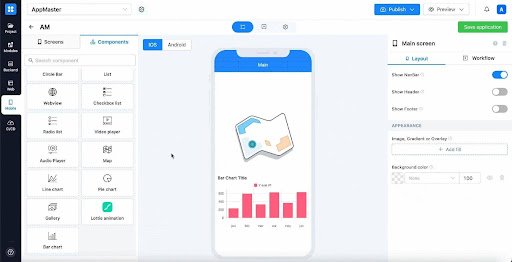
No-code templates are pre-designed structures that let users build apps using visual tools instead of traditional programming. They include ready layouts, workflows, and UI components that can be customized for business needs.
Instead of writing complex code, users can drag, drop, and configure elements to create dashboards, marketplaces, booking systems, and SaaS platforms.
This approach removes technical barriers and makes app development accessible to entrepreneurs, marketers, and small business owners.
Key Benefits of No-Code Templates
These advantages make no-code solutions a practical choice for faster and more efficient web app creation.
1. Faster Product Development
One of the most significant advantages is speed. Traditional development cycles can take months, but no-code tools reduce this to days or even hours.
By using structured frameworks like no-code app design templates, teams can quickly assemble functional prototypes without starting from scratch. This allows businesses to test ideas rapidly and make improvements based on real user feedback.
The ability to iterate quickly often becomes a competitive advantage in fast-changing markets.
2. Reduced Development Costs
Hiring full-stack developers, UI/UX designers, and backend engineers can be expensive. No-code platforms significantly reduce these costs by eliminating the need for large technical teams.
Instead of investing heavily in initial development, businesses can focus resources on growth, marketing, and customer acquisition.
Startups especially benefit from this model, as they can launch minimum viable products (MVPs) without burning through capital.
3. Easy Accessibility for Non-Developers
No-code development democratizes app creation. People without programming backgrounds can now build fully functional applications using intuitive interfaces.
Product managers, founders, and business analysts can directly contribute to product development without relying entirely on engineering teams. This reduces communication gaps and speeds up decision-making.
With no-code app design templates, even beginners can understand how components fit together and how workflows operate, making app creation far more accessible than traditional coding.
4. Improved Design Consistency and Quality
Consistency in design plays a major role in user experience. No-code templates come with professionally designed UI systems that ensure visual harmony across all screens.
These templates are built following modern design standards, ensuring that applications not only function well but also look polished and user-friendly.
Interestingly, many platforms now offer no-code best app design templates that are optimized for different industries such as fintech, healthcare, education, and e-commerce. The availability of no-code app design templates across niches ensures that businesses can maintain a professional look while still customizing layouts to match their brand identity.
5. Flexibility and Easy Customization
Despite being template-based, no-code tools are highly flexible. Users can modify layouts, adjust workflows, and integrate third-party tools without touching complex code.
This flexibility allows businesses to evolve their applications as their needs change. Whether it’s adding new features or redesigning user flows, updates can be made quickly without disrupting the entire system.
This adaptability is particularly useful for startups operating in dynamic environments.
6. Seamless Collaboration Across Teams
No-code platforms encourage collaboration between technical and non-technical teams. Designers, marketers, and developers can work within the same environment, making real-time updates and suggestions.
This unified workflow eliminates the delays caused by back-and-forth communication between departments.
As a result, product development becomes more transparent and efficient, with everyone aligned toward a shared goal.
How No-Code Templates Are Changing Business Strategy
Beyond development speed, no-code tools are influencing how businesses think about innovation. Companies are now able to experiment more freely, test multiple ideas, and pivot quickly based on market demand.
Instead of committing to long development cycles, teams can launch multiple versions of an application, analyze user behavior, and refine their products continuously.
This shift has led to a more agile business environment where experimentation is encouraged rather than avoided.
Industries Benefiting the Most
No-code development is not limited to a single sector. It is being widely adopted across industries:
- Startups: Rapid MVP creation and testing
- E-commerce: Quick setup of online stores and dashboards
- Education: Learning management systems and student portals
- Healthcare: Patient management and scheduling systems
- Finance: Internal dashboards and reporting tools
Each industry benefits from faster deployment, reduced costs, and simplified maintenance.
The Future of Web App Development
The future of application development is increasingly visual and automated. As AI and no-code platforms evolve, building complex applications will become even more intuitive.
We are moving toward a world where technical expertise is no longer the only gateway to innovation. Instead, creativity, strategy, and problem-solving will drive digital product development.
No-code tools will continue to integrate AI-driven suggestions, smarter workflows, and enhanced customization options, making them even more powerful.
Conclusion
No-code development is reshaping how digital products are built, making them faster, more accessible, and cost-effective. With growing no-code app design templates, businesses focus more on innovation than technical limits. In global markets, especially using a template for web application in USA, companies adopt no-code platforms to accelerate digital transformation and stay competitive.
If you are looking for a smarter way to manage workflows and improve operational efficiency, Workmaster is an AI-driven productivity and workflow management platform designed to streamline business operations through automation and intelligent task organization. It focuses on improving efficiency, collaboration, and digital transformation by helping teams manage processes in a structured and scalable way, supporting modern businesses in achieving higher operational performance.