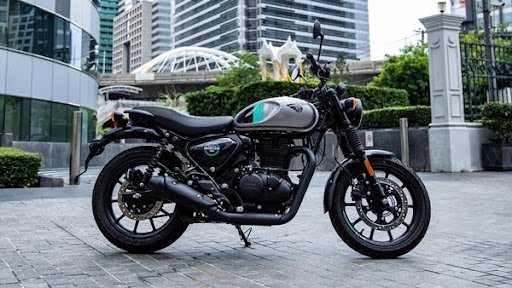
The Hunter 350 price places it in a highly competitive part of the Indian motorcycle market. Royal Enfield currently lists the Hunter 350 from around ₹1.51 lakh ex-showroom on its live product page, with higher trims costing more. That means buyers may compare it not only with retro roadsters but also with sporty 150–160cc motorcycles.
One common cross-shopping point is the Yamaha MT-15 because its performance and efficiency create a different ownership proposition. Searches for Yamaha MT 15 mileage often reflect buyers asking whether a lighter 155cc motorcycle makes more financial sense than a torquey 350cc roadster.
The Hunter 350 Offers More Than Engine Capacity
The Hunter uses Royal Enfield’s 349cc J-series engine producing 20.2 bhp and 27 Nm. The five-speed gearbox and strong low-rpm torque suit relaxed urban riding.
The engine does not chase high revs. Its appeal lies in easy roll-on response and a substantial feel at normal road speeds.
The 2026 Updates Improve Value
Current Hunter 350 versions add features such as an LED headlamp, Type-C charging, Tripper navigation equipment, slip-and-assist clutch and revised suspension.
These improvements address practical daily concerns rather than simply refreshing the colour range.
Ride Comfort Is Better Than Earlier Versions
Royal Enfield revised the suspension and seat comfort on newer Hunter versions. Earlier motorcycles were often criticised for a firm rear ride.
This matters because a daily motorcycle spends more time dealing with potholes and speed breakers than demonstrating performance on perfect roads.
Why Hunter 350 Price Appeals to First-Time Royal Enfield Buyers
The Hunter is one of the more accessible entry points into the brand. It provides the 350cc engine character without the larger proportions of the Classic or Bullet.
For younger buyers, this makes Royal Enfield ownership feel less intimidating.
The 181 kg Weight Is a Compromise
The Hunter is lighter than some other Royal Enfield 350s but still substantially heavier than 150cc-class motorcycles. This is noticeable when moving the bike manually.
Once riding, the compact chassis and 17-inch wheels make it feel easier to manage than the number suggests.
Yamaha MT-15 Takes the Opposite Approach
The MT-15 uses a 155cc liquid-cooled VVA engine, six-speed gearbox, traction control and dual-channel ABS. It is far lighter and more performance-oriented.
The motorcycle rewards revs and cornering, while the Hunter rewards low-rpm torque and relaxed progress.
Yamaha MT 15 Mileage Can Be an Ownership Advantage
A smaller 155cc engine generally consumes less fuel than a 349cc single when ridden similarly. Actual Yamaha MT-15 mileage depends on traffic, speed and rider behaviour, but fuel cost can be lower over high annual distances.
Commuters covering thousands of kilometres every year should include this difference in their total-cost calculation.
Hunter 350 Provides More Low-End Torque
The Hunter’s 27 Nm output gives it a strong, easygoing feel in traffic. The rider does not need to rev the engine aggressively to make progress.
This can make everyday riding feel more relaxed, especially for riders who prefer short-shifting.
MT-15 Offers Better Performance per Kilogram
The Yamaha’s lighter chassis and high-revving engine create stronger acceleration relative to its displacement. It also changes direction more eagerly.
Riders who enjoy sporty handling may therefore see greater value in the MT-15 even if the Hunter has a much larger engine.
Which One Is Better for Pillion Use?
The Hunter’s broader torque can be useful with a passenger, though pillion comfort should be tested on the exact seat configuration.
The MT-15’s compact rear seat is more sport-oriented and may be less comfortable for frequent two-up travel.
Which One Is Better for City Traffic?
The MT-15’s lighter mass gives it an advantage in dense traffic. The Hunter counters with easy torque and an upright position.
The best choice depends on whether the rider values low-speed physical lightness or relaxed engine response more strongly.
Is Hunter 350 Price Worth Paying?
Yes, for riders who specifically want the Royal Enfield 350cc character in a compact urban package. The 2026 updates improve comfort and everyday equipment enough to strengthen the value proposition.
Buyers who prioritise fuel economy and sporty handling should still compare the MT-15. The Hunter is worth its price when identity, torque and road presence matter more than outright efficiency.
What to Check Before Booking
Test ride the exact variant, confirm local ex-showroom and on-road pricing, and compare insurance costs. Buyers should also consider annual fuel distance because a small efficiency difference becomes meaningful over several years.
The most expensive mistake is choosing by engine size alone. The Hunter 350 and MT-15 prove that two motorcycles can serve similar budgets while delivering completely different experiences.
Variant Selection Matters More Than the Starting Price
The headline Hunter 350 price represents the entry point, but higher variants add different colours, wheels and equipment. A buyer should compare what is actually included before deciding that one version is better value. The latest Metro-oriented variants with LED lighting, navigation and other convenience features may justify the premium for riders who use those functions every day.
Someone who simply wants the 349cc engine and compact chassis may prefer a lower trim. The value decision should therefore be based on required hardware rather than choosing the most expensive version automatically.
Think About Five-Year Running Cost
Fuel is where the Hunter and MT-15 can diverge materially over time. A rider covering 12,000 km annually will travel about 60,000 km in five years. Even a modest mileage advantage can create a meaningful difference in fuel spending across that distance.
The Hunter counters with stronger torque and a more substantial feel. Buyers should therefore decide whether the extra fuel cost is justified by the riding experience they prefer. Looking beyond the showroom price makes the comparison much more realistic.
Insurance and Tyre Costs Also Affect Value
The purchase decision should include insurance renewal and replacement tyres, not just fuel. The Hunter’s wider 17-inch tyres and larger engine can cost more to insure and maintain than a lightweight 155cc motorcycle. These differences are manageable, but they become more visible over several years of ownership.