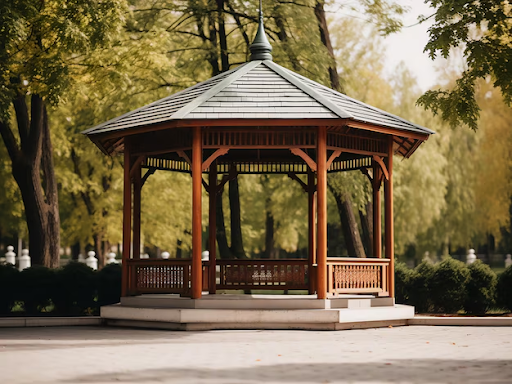
Timber frame gazebos have a way of turning open yard space into a destination. When you explore timber frame gazebos, you’re considering structures that offer both shelter and a sense of occasion. Positioned thoughtfully, a gazebo can draw people out of the house, provide a shaded retreat, and serve as a visual anchor that ties together gardens, lawns, and paths.
What Sets Timber Gazebos Apart From Other Outdoor Structures?
Gazebos are distinct because they feel like outdoor rooms with their own identity. Timber construction adds another layer of appeal. The solid posts, beams, and rafters of custom timber gazebos give them a presence that lighter materials often lack. Wood’s natural grain and tone fit seamlessly into landscaped environments, especially when paired with stone, plantings, or water features.
Unlike temporary shelters, timber-based outdoor gazebo structures are designed as long-term elements of the property. The combination of engineering and craftsmanship allows them to handle changing weather while retaining their character. For many homeowners, the gazebo becomes the heart of the yard—a spot associated with celebrations, quiet mornings, and everyday relaxation.
How Can a Timber Frame Gazebo Support Different Uses?
A gazebo can play many roles depending on where it is placed and how it is furnished. Some homeowners treat their gazebo as an open-air dining pavilion, adding a table and chairs for family meals or gatherings with friends. Others arrange it as a lounge space with comfortable seating and side tables, turning it into a place to read, talk, or simply enjoy the view.
Custom timber gazebos can also be integrated into more specialized setups. Positioned near a pool, they can offer shaded rest areas between swims. Placed near a garden, they become a peaceful overlook for taking in flowers and greenery. Because the structure can be sized to your needs, it can remain intimate or accommodate larger groups for events and celebrations.
What Should You Consider When Planning a Gazebo?
Thoughtful planning helps a gazebo feel intentional and well-suited to its surroundings. Start by clarifying the main ways you plan to use it. The number of people you expect to host regularly and the type of furniture or activities you envision will shape the size and layout. This ensures there is enough room to move comfortably without making the gazebo feel empty or cramped.
Placement in the yard is equally important. Consider existing views, sun patterns, and proximity to the house. A gazebo positioned to capture a favorable view—such as a garden, water feature, or open landscape—will be more inviting. At the same time, orienting the structure to provide shade during the parts of the day you use it most can increase comfort.
How Do Materials and Finishes Influence Durability?
The longevity of timber frame gazebos depends on using quality materials and appropriate finishes. Strong timbers that are properly treated and sealed are better able to handle moisture, UV exposure, and daily wear. The choice of stain or finish influences both the appearance and the resilience of the structure, allowing you to highlight the wood’s natural beauty while protecting it.
Maintenance habits make a noticeable difference over time. Regular cleaning to remove dirt and organic debris, periodic checks of joints and hardware, and refinishing as needed all support the gazebo’s structural health and aesthetics. When these tasks are part of a routine, the gazebo continues to feel like a well-kept centerpiece rather than a neglected corner of the yard.
Which Design Details Enhance Comfort and Atmosphere?
A few well-chosen details can significantly elevate the experience of spending time in a gazebo. Lighting is one of the most impactful. Fixtures mounted on posts or within the roof structure, along with nearby path lighting, can create a warm glow that extends the gazebo’s use into the evening. This makes it a natural gathering point after sunset.
Furnishings and accessories also shape atmosphere. Outdoor cushions, rugs, and textiles soften the timber frame and add color. Planters placed around or within the structure bring greenery closer, blurring the line between the gazebo and the surrounding landscape. Some homeowners add features like hanging swings or hammocks where appropriate, creating a more playful or relaxed mood.
Can Timber Frame Gazebos Work in Different Climates?
Timber-based outdoor gazebo structures can be adapted for various climates with thoughtful design. In areas with cold winters and snow, roof pitch and structural engineering are especially important to handle potential loads. In warmer, sunnier regions, wider overhangs and ventilation help keep the space cooler and more comfortable.
Open sides encourage air circulation, which is useful across many climates. For cooler evenings, portable heaters positioned safely can extend the season of use. In all cases, paying attention to local weather patterns and sunlight enables the gazebo to function well in everyday conditions rather than just on ideal days.
Conclusion
Timber frame gazebos bring structure, charm, and practicality to outdoor spaces, transforming them into places people naturally gravitate toward. By focusing on placement, materials, design details, and maintenance, you can create a gazebo that not only looks striking in the landscape but also supports the rhythms of your daily life outside.