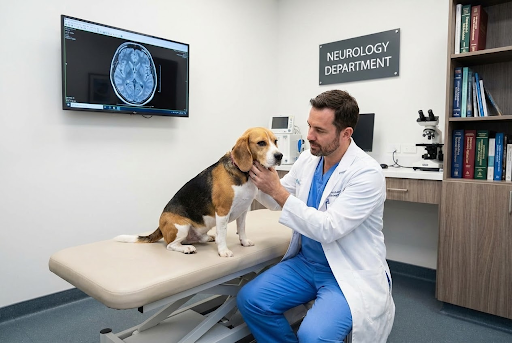
When a pet develops seizures, difficulty walking, or sudden behavior changes, many owners wonder whether it is time to consult a dog neurology specialist. Neurological issues can be subtle at first or appear suddenly as emergencies, and they often require expertise beyond general practice. Understanding what a veterinary neurologist does and when a referral is appropriate can help you make informed decisions about your dog’s care.
What Does a Veterinary Neurologist Do?
A veterinary neurologist is a veterinarian who has completed advanced training focused on diseases of the brain, spinal cord, nerves, and muscles. These specialists are skilled at interpreting neurological exams, choosing appropriate diagnostic tests, and designing targeted treatment plans. While general veterinarians handle many routine conditions, complex neurological issues may benefit from specialist-level evaluation.
Neurologists work with conditions ranging from epilepsy and spinal cord injury to neuromuscular diseases and inflammatory brain disorders. They often collaborate with other specialists in surgery, internal medicine, and radiology to provide comprehensive care.
Signs Your Dog May Have Neurological Issues
Not every stumble or odd behavior is a sign of serious disease, but certain changes warrant prompt attention and possibly a neurology referral. Concerning signs include:
- Seizures or episodes that resemble “fainting” with paddling, drooling, or loss of consciousness.
- Sudden difficulty walking, especially if one side or the hind legs are more affected.
- Ataxia (wobbly, uncoordinated gait) or circling.
- Marked changes in behavior, personality, or alertness.
- Head tilt, rapid eye movements, or loss of balance.
- Weakness in facial muscles or difficulty swallowing.
If your primary veterinarian detects abnormalities on the neurological exam, they may recommend consultation with a dog neurology specialist to refine the diagnosis.
How Neurology Consults Are Performed
A neurology consult begins with a thorough history, including onset, progression, and triggers for your dog’s signs. The specialist then performs a detailed neurological examination, assessing:
- Mental status and behavior.
- Cranial nerve function (vision, facial movement, swallowing).
- Posture and gait.
- Spinal reflexes and pain perception.
From these findings, the veterinary neurologist localizes the lesion within the nervous system—such as brain, cervical spinal cord, thoracolumbar spinal cord, or peripheral nerves. This step guides which diagnostic tests will be most informative.
Diagnostic Tools Used by Neurologists
Veterinary neurologists frequently work with advanced imaging and laboratory tests to clarify the cause of neurological issues. Common diagnostics include:
- MRI or CT scans to visualize the brain and spinal cord.
- Cerebrospinal fluid (CSF) analysis to detect inflammation, infection, or cancer.
- Electrodiagnostic tests (such as EMG or nerve conduction studies) for neuromuscular disorders.
- Blood and urine tests to screen for systemic diseases that can affect the nervous system.
These tools help differentiate between conditions such as disc disease, brain tumors, inflammatory encephalitis, strokes, and metabolic encephalopathies.
Treatment Options and Ongoing Management
Once a diagnosis is established, the dog neurology specialist develops a treatment plan tailored to your pet’s condition, overall health, and lifestyle. Options may include:
- Medications such as anti-seizure drugs, steroids, or immunosuppressive agents.
- Surgical interventions, particularly for spinal cord compression or certain brain tumors.
- Rehabilitation therapy and supportive care for dogs with chronic deficits.
- Long-term monitoring and periodic rechecks to fine-tune therapy.
Clear communication between the neurologist, primary veterinarian, and family ensures that everyone understands the goals of treatment and the expected course of disease.
When to Ask for a Referral
If your dog’s signs are recurrent, worsening, or difficult to control despite initial treatment, it is appropriate to ask about a neurology referral. You might also consider seeing a veterinary neurologist when:
- Imaging or testing beyond the capabilities of your primary clinic is needed.
- A second opinion is desired for a complex or uncertain diagnosis.
- You want to explore all possible options for advanced care.
Early specialist involvement can sometimes change the course of disease, prevent complications, and improve quality of life.
Conclusion: Expert Help for Complex Conditions
Neurological issues in dogs can be challenging to understand and manage without specialized training. By recognizing concerning signs and seeking care from a dog neurology specialist when appropriate, owners can give their pets the best chance at accurate diagnosis and effective treatment. Collaboration between your primary veterinarian and a veterinary neurologist provides a comprehensive, team-based approach to complex neurological care.