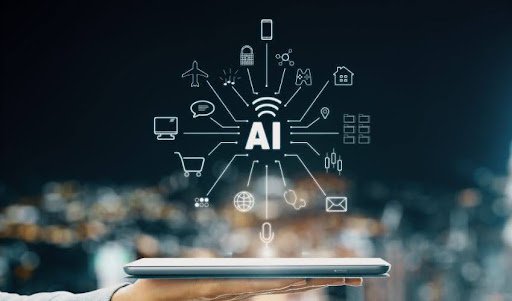
AI, or Artificial Intelligence, isn’t a “science fiction” tool anymore – instead, it’s now an integral part of modern digital marketing strategies. Customers have become accustomed to seamless and tailored digital marketing and, the truth is, manually managing interactions with hundreds and thousands of customers is really no longer viable, particularly for companies in highly saturated online markets. AI serves to make processes less time-consuming, as it can effectively automate tasks, offer predictions and streamline operations across the board.
AI applications for marketers There’s a multitude of AI-powered tools that marketers can utilize to enhance their strategies, ranging from customer data analysis to content creation, personalized advertising and even improving SEO efforts – basically improving speed, accuracy, and knowledge that contributes to overall smart decisions and customer engagement with your products. AI enhances marketing and is not used to replace marketers but as a tool to assist them using the knowledge they gained through the data.
Growing Influence of AI to expand digital marketing The overall AI market is expanding at a tremendous rate. As per Expert Market Research’s report “global artificial intelligence market value was USD 3.19 trillion in 2025 and will grow up to USD 52.80 trillion by 2035, at a CAGR of 32.40% for the years 2026 to 2035. This rapid growth reflects AI’s expanding significance as it moves to empower and transform businesses globally. Digital marketing is not one among them but instead is one of the dominant industries leveraging the power of artificial intelligence.These are simply a few ways how the impact of artificial intelligence on digital marketing
What Is Artificial Intelligence in Digital Marketing?
Artificial intelligence in digital marketing is the application of technologies such as machine learning, natural language processing, predictive analytics, and automation to optimize your marketing efforts. Traditionally marketers manually tracked their campaigns, now instead, the technology is analyzing huge chunks of customer data identifying patterns, predicting future customer behavior and providing optimal recommendations.
Whenever a customer searches for a product, clicks on an ad, browses a website, views a video or engages with a brand on social media, a data trail is formed. This data is then analyzed in a matter of seconds by artificial intelligence which in turn helps marketers understand what customers want and at what point is it most probable for them to purchase, and which campaigns are working most effectively.
Most of your current digital marketing tools actually operate on an artificial intelligence level. Search engines like Google analyze and optimize results based on AI, e-commerce companies recommend products based on browsing behavior, streaming services provide custom content options based on viewed content and email marketing tools allow personalization of campaigns.
Why Businesses Are Adopting AI in Digital Marketing
It seems in the last decade there has been a shift in how consumers approach purchasing goods from brands. They now desire to have a brand’s knowledge of their preferences carried throughout every experience they may have online – whether that is via websites, mobile, search, social platforms, etc. One-size fits all marketing efforts are being sidelined because customers gravitate to content that caters to their interests. AI can address this by harnessing real-time data analysis to access immense volumes of customer intelligence.
Where marketers can once try their best to make decisions based on gut, businesses can leverage real time data analysis to optimize performance. A second aspect for the growth of the use of AI is due to the growing complexity of digital marketing tactics. Businesses today often operate many advertising platforms simultaneously with numerous email programs as well as multiple websites, various social media profiles, etc. AI offers relief with automating many tasks, allowing businesses’ marketing divisions to allocate more time to innovation and customers.
Benefits of Artificial Intelligence in Digital Marketing
Personalized Customer Experiences
AI provides immense benefits for marketing such as offering a totally personalized experience for customers. All customers will have different interests, shopping habits, and purchase histories. Artificial intelligence will process this data, so it can recommend specific products, display relevant website information, and send tailored emails.
For instance, it’s used on online shopping sites where recommendations are provided based on previous searches and purchases, as well as streaming services where users are recommended movies or songs according to their preferences. Customers value this personal touch as they are likely to purchase products they feel relevant as opposed to advertisements of less interest. Businesses too benefit from this increase in customer satisfaction through increased engagement, higher conversion rates and improved customer loyalty.
Better Customer Insights
Customer Insight Understanding the behaviour and habits of your customers is crucial and can often be one of the greatest challenges in digital marketing. AI can help through analysing data mined from website’s, search engines, mobile apps, social media websites and display adverts on the internet.
Without a need to manually report on information you will be delivered with comprehensive information into customers preferred brands, purchase trends and what engaged customers are viewing and liking on the website. AI helps to show which products have got the best draw and what sort of content works well online along with understanding which of the online marketing channels give the best ROI.
Smarter Content Creation and Optimization
Content is a King in Digital marketing whether it’s any blog, post, description of products, any update of a social media site, an email that you will send to the subscribers. You may know the thing, creating content is indeed a time consuming, and energy-draining process. That’s where the role of an AI writing tool comes in handy for digital marketers that helps them develop concepts, craft outliners, optimize the article heading, research related to the keyword, improve the content readability, and even analysis of competitive article and then let the AI guide the recommendations about the topics, that can attract considerable number of visitors.
While AI’s writing tool accelerates the content production process, don’t forget to employ a human writer or marketer to make certain their crafted content is original, accurate and also aligns with your brand’s objectives .
Improved Advertising Performance
AI for Digital Marketing The most popular application for artificial intelligence in the advertising domain are digital advertising platforms. These platforms utilize machine learning algorithms to determine the audience traits that would likely best respond to any marketing campaigns. They will evaluate demographic, browsing behavior, the engagement information and so forth of each individual audience segment.
In addition, automated bidding, budgets, and audience selection using AI enable more strategic advertising with minimized expenditure. It eliminates the need for manual evaluation of campaign results with campaigns adjusted on the go as they go with respect to the live data and the desired outcomes can be delivered with equivalent expenditure.
Marketing Automation
Most of the time your marketing requires to complete many processes repeatedly which ultimately require lots of time. AI helps us do work like scheduling emails, analyzing customers by segment and score them, checking up on campaigns with the help of reporting of that performance, automated answers of chatbots and reports.
This type of system decreases human risk or we can also say that it decreases the human activity of manual checking, and by this we give lots of time for making marketing strategies for the best possible.
Better SEO Performance
Search engine optimization is more than just stuffing keywords into web pages; search engines that useAI can figure out what users are looking for, determine which of websites is best to rank, and assess the value of that content prior to making the decision.
AI-fueled SEO tools, the best keyword research options, will analyze search purpose, locate technological site issues, enhance internal connectivity, observe rival performance, and assist you to make awesome content. Since searchable AI will maintain getting an element of search, companies who place focus on informational, respected content also that serve visitors are going to be well for maintaining significant organic visibility.
Challenges of Artificial Intelligence in Digital Marketing
Data Privacy and Security
AI relies heavily on rich customer data in order to provide customized services for customers. Some of the data most typically captured includes Internet history, browsing behavior, real-time user location, online behavior of social networking profiles etc. All aimed to enable advertisers to effectively reach their target audience.
Nonetheless, the privacy of customer data also raises concerns as companies must conform to relevant data protection and security measures and provide a sense of transparency when it comes to the gathering and implementation of their customers’ information, as security threats can affect the company’s business reputation and consumer trust.
Content Accuracy and Quality
Generative AI can help content get done more quickly than before. However, faster content doesn’t need to mean sloppy content. Without review, some of the information you generate can lead to factually incorrect, outdated or boring information and the same word gets used multiple times throughout a piece of content. Instead of completely replacing professionals with generative AI, businesses must recognize it as one step in content creation where expert guidance and editorial review of the content is critical.
Ethical Concerns
AI systems make judgments using the data with which it was trained. If you have the data to train, and if data doesn’t have diversity or bias, the AI system will probably give you very biased advice or result in wrong conclusions. Businesses need to develop a program that tests AI systems to see if they are ethically responsible on a continuous basis, because the utilization of AI in terms of human-centered business becomes much more frequent.
Dependence on Automation
While automation is of great help and an enormous source of energy; we may start over-dependent on these technologies that at some level may deteriorate human ingenuity and the human touch from marketing practices. Marketing the products demands not just efficiency but storytelling skills, EmotionalQuotient (EQ) and Emotive intelligence for relating to people’s feelings – aspects where these technologies cannot perform the magic completely. Businesses can smartly employ their technology teams to aid marketers but cannot replace the wisdom.
Skills and Training
Because the adoption of AI is fast, many new skills need to be learned by many marketers. New core skills include having a good knowledge of data analytics, AI tools, marketing automation and how to interpret data.
Future Trends in AI and Digital Marketing
Hyper-Personalization
Personalization versus Hyper-Personalization. Instead, marketers will move towards hyper-personalization by analyzing real time customer data to serve recommendations, offers and web experiences dynamically and on the fly tailored to the individual and context.
Predictive Marketing
Predictive analytics capabilities will improve further. In the future, AI won’t just analyze past transactions. It will be able to predict the next moves your customers make and identify times when there’s a selling window, a risk of a customer churning or an opportunity to execute more targeted marketing before there’s even an issue.
Voice and Visual Search Optimization
The popularity of image based search and smart voice assistants is likely to increase for the foreseeable future. Businesses should create content to attract voice-search and image-based search, generating the content which answers conversational-language queries using high-quality imagery with rich-media information.
AI-Powered Customer Service
NextGen chatbots and Virtual assistants. The age of intelligence for CS will come with chatbots and virtual assistants having much greater capability of conversing even with intricate customer challenges in the future. The AI will understand the background of conversations, initiate and complete Natural Language Conversations more, and fix their problems with less and less errors to bring enhanced satisfaction with decreased overall CS resolution time.
Smarter Marketing Automation
Marketing automation solutions will increasingly embrace the integration of customer data, predictive analysis, and real-time optimization into their system.AI will help by automating changes, identifying appropriate budget modifications, personalizing content and finding new opportunities for revenue.
Responsible AI Adoption
The more pervasive the influence of AI in marketing expands, a larger emphasis will be placed on the responsible application of this powerful new tool. Transparency, ethics, consumer privacy, and human review will feature as an intrinsic part of the best and brightest AI strategy implementations, creating greater levels of trust, and ensuring companies maintain a competitive edge.
Conclusion
How artificial intelligence changes digital marketing Artificial intelligence is changing digital marketing campaigns. It’s turning them more intelligent, personalized, and efficient. Companies are able to make better decisions, offer customers better marketing messages, automate tasks such as the customer’s activity analysis and optimizeSEO or PPC. There are, of course, numerous challenges such as ethical standards or ensuring data privacy as well as quality of created content.
However, when responsible, the long-term benefits for the company are much higher than the risks. By merging artificial intelligence solutions with creative, analytical human thinking and a customer-oriented marketing policy, companies will be more prepared for future expectations and will stand a chance at more sustainable development. Digital marketing the future will not be solely a technology as much as the company’s ability to match technology with the human factor