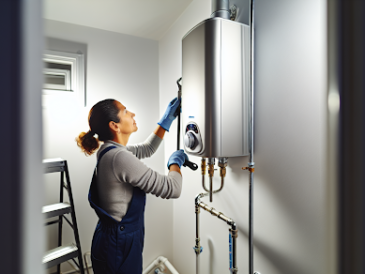
Planning a water heater installation Simi Valley involves understanding system types, budget requirements, and long-term value. Whether upgrading from aging tanks, retrofitting tankless systems, or new construction installations, this comprehensive guide explains options, installation procedures, and factors affecting total project costs in Simi Valley’s unique climate and infrastructure.
Water Heater Types: Comparison Matrix
| Type | Capacity | Lifespan | Install Cost | Annual Energy | Maintenance |
| Tank (Gas) | 40-60 gal | 8-12 yrs | $1,200-1,800 | $150-200 | Moderate |
| Tank (Electric) | 40-60 gal | 8-12 yrs | $800-1,200 | $200-300 | Moderate |
| Tankless (Gas) | Unlimited | 15-20 yrs | $2,500-4,000 | $80-120 | High |
| Tankless (Electric) | Unlimited | 15-20 yrs | $1,800-3,000 | $120-180 | High |
| Heat Pump | 50-80 gal | 12-15 yrs | $3,500-5,000 | $50-100 | Moderate |
Traditional Tank Water Heaters
Tank systems heat and store 40-60 gallons continuously, maintaining temperature through thermostat control. Gas models cost $200-400 less upfront but consume natural gas continuously; electric models operate cheaper (20-30% lower fuel costs) without gas line requirements.
Advantages: Lower upfront cost, straightforward installation, reliable performance
Disadvantages: Space requirements (3-4 feet clearance), energy losses during storage, 8-12 year lifespan
Tankless Water Heaters
On-demand systems heat water as it flows through the unit, eliminating storage losses. Gas tankless models provide unlimited hot water for simultaneous showers; electric units typically serve single fixtures.
Advantages: 30-40% energy savings, compact size, 15-20 year lifespan, unlimited hot water (gas)
Disadvantages: Higher upfront cost ($2,500-4,000), requires professional descaling annually, limited simultaneous flow (electric)
Hybrid Heat Pump Systems
Heat pump water heaters extract warmth from surrounding air, concentrating it through compression. Most efficient option (50% energy reduction vs. tank units) but requires ambient temperatures above 50°F—viable in Simi Valley’s mild winters.
Advantages: Highest efficiency, significant long-term savings, longer lifespan (12-15 years)
Disadvantages: Highest installation cost ($3,500-5,000), requires adequate air circulation, slower recovery rate
Simi Valley Installation Considerations
Local Infrastructure
Simi Valley’s municipal water supply provides consistent pressure and temperature. Professional installers verify:
- Water pressure (45-80 PSI acceptable; high-pressure homes require expansion tanks)
- Supply line materials (copper vs. PEX compatibility)
- Utility connections (natural gas line sizing, electrical capacity for electric models)
Seasonal Factors
Simi Valley’s warm climate reduces heating demand compared to northern regions. Smaller capacity units often suffice; heat pump systems maximize efficiency leveraging consistently mild ambient temperatures (rarely below 45°F).
Space & Venting
Tank installations require 3-4 feet clearance for service access. Gas models need proper venting (horizontal venting requirements differ from vertical). Tankless units mount wall-space or outdoor installation, maximizing available storage.
Professional Installation Process
Step 1: System Selection & Sizing
Professionals calculate household hot water demand based on:
- Family size and usage patterns
- Simultaneous hot water appliances (showers, dishwashers, laundry)
- Climate conditions (heating demand)
Undersizing causes insufficient hot water; oversizing wastes energy and space.
Step 2: Old Unit Removal
Existing water heater disconnection involves:
- Shutting off water supply
- Draining tank (prevents flooding)
- Disconnecting gas lines or electrical connections
- Removing mounting braces and drain pan
- Disposing of old unit (recycling for copper/steel recovery)
Step 3: Installation & Connection
Professional installation includes:
- Proper positioning (level, accessible, clearance maintained)
- Supply line connection (shutoff valve installed upstream)
- Drain pan installation (catches leaks, protects flooring)
- Gas line or electrical connection (per code)
- Expansion tank installation (if high-pressure system)
- Venting (gas models only)
- Pressure relief valve installation
Step 4: Inspection & Startup
Licensed installers:
- Test water connections for leaks
- Verify thermostat operation
- Confirm venting (gas units)
- Test temperature output
- Provide warranty documentation
- Demonstrate maintenance requirements
Cost Breakdown for Simi Valley Installations
Tank Unit Installation ($1,200-1,800 total)
- Unit cost: $500-800
- Labor: $300-500
- Materials (pipes, connections, valves): $200-300
- Disposal: $50-100
- Permits/inspections: $100-150
Tankless Unit Installation ($2,500-4,000 total)
- Unit cost: $1,500-2,500
- Labor: $600-900 (more complex)
- Gas line upgrade or electrical panel upgrades: $300-800
- Venting modifications: $200-400
- Permits/inspections: $100-200
Heat Pump Installation ($3,500-5,000 total)
- Unit cost: $2,500-3,500
- Labor: $700-900
- Drain location modifications: $200-400
- Electrical upgrades: $200-600
- Permits/inspections: $150-200
Maintenance Extending System Life
Professional maintenance programs ($150-300 annually):
- Tank units: Annual flushing (sediment removal), anode rod inspection, pressure valve testing
- Tankless units: Annual descaling (mineral removal), filter cleaning, combustion inspection
- Heat pump units: Air filter changes, coil cleaning, performance monitoring
Maintenance investments prevent premature failures, extending system lifespan 2-4 additional years.
Conclusion
Professional water heater installation in Simi Valley projects requires careful system selection, balancing upfront costs, energy efficiency, lifespan, and household requirements. Tank systems suit budget-conscious homeowners; tankless/heat pump options justify higher investment through 15-20 year lifespans and significant energy savings. Licensed professional installation ensures code compliance, proper operation, and warranty protection.