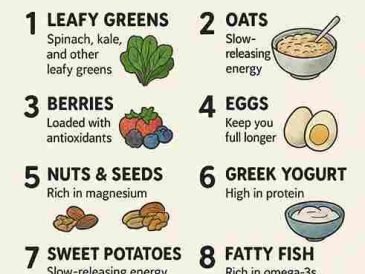
Feeling tired halfway through your day, even after a good night’s sleep? The culprit might not be your routine — it could be your diet. What you eat and how you eat directly impact your energy, focus, and productivity. In this guide, we’ll explore 8 simple, science-backed ways to balance your diet and stay energized from morning to night.
1. Start Your Day with a Power-Packed Breakfast
Breakfast kick-starts your metabolism and replenishes your energy after hours of rest.
What to include:
- Whole grains (oats, multigrain toast) — rich in complex carbs that release energy slowly due to a low glycemic index
- Protein (eggs, yogurt, nuts) for steady energy and fullness
- Fresh fruits for vitamins and natural sugars
Tip: Avoid sugary cereals and pastries — they give quick highs and sudden energy crashes.
2. Balance Macronutrients in Every Meal
A balanced diet isn’t just about eating less — it’s about eating right. Each meal should include carbohydrates, proteins, and healthy fats.
- Complex carbs (like brown rice or quinoa) for lasting energy
- Lean proteins (like lentils, tofu, or chicken) for muscle repair
- Healthy fats (like avocados, olive oil, or seeds) for nutrient absorption
Quick Rule: Fill half your plate with veggies and fruits, one-quarter with whole grains, and one-quarter with protein.
3. Eat Smaller Meals More Frequently
Instead of three heavy meals, try five to six smaller meals spaced evenly throughout the day. This helps keep your blood sugar stable and prevents post-meal drowsiness.
Examples:
- Mid-morning fruit or smoothie
- A handful of almonds or Greek yogurt in the afternoon
This strategy keeps your metabolism active and your energy steady.
4. Stay Hydrated — Water Is Energy’s Best Friend
Even mild dehydration can lead to fatigue and poor concentration.
Aim for 2–3 liters of water daily.
Add water-rich foods like cucumber, watermelon, and oranges.
Pro Tip: Add lemon, mint, or chia seeds to your water for extra flavor and electrolytes.
- Limit Caffeine and Refined Sugar
Caffeine and sugary foods may give quick energy boosts but often lead to a crash later.
Replace sugary snacks with fruit or dark chocolate.
Swap one cup of coffee for green tea or herbal tea — they provide a smoother, longer-lasting energy lift.
- Include Iron and B-Vitamins for Vitality
Iron and B-vitamins are essential for energy metabolism.
Add spinach, lentils, eggs, and fortified cereals for iron.
Include whole grains, dairy, and leafy greens for B-vitamins.
Studies show that B-vitamins help your body convert food into energy, while iron supports oxygen transport — both crucial for reducing fatigue.
- Plan a Light, Balanced Dinner
Heavy dinners can make you sluggish and interfere with quality sleep.
✅ Choose lean proteins (like grilled fish or lentils) and colorful vegetables.
✅ Avoid greasy or high-fat foods late at night — they slow digestion and disrupt rest.
- Be Consistent, Not Perfect
Balancing your diet is a long-term habit, not a quick fix.
Start small — replace refined carbs with whole grains, drink more water, and add one extra serving of veggies each day. Over time, these small shifts create big improvements in your energy and focus.
Final Thoughts
A balanced diet fuels not just your body but your mind. When you eat smart, stay hydrated, and make nutrient-rich choices, you’ll notice higher energy, sharper focus, and better moods throughout the day. Combine these habits with regular sleep and exercise — and you’ll have all-day vitality, naturally