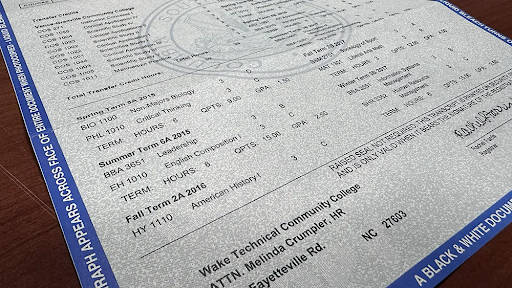
When applying to colleges, jobs, or scholarship programs, high school graduates often need to submit their Fake transcripts. Whether you misplaced your original transcript or need additional copies, deciding between digital and printed versions can be crucial. In this blog, we’ll break down the differences, advantages, and potential drawbacks of both digital and printed duplicate transcripts to help you make an informed decision.
Understanding Digital and Printed Duplicate Transcripts
A duplicate transcript is an officially issued copy of your original high school transcript. Schools provide them to students who need to send their academic records to institutions, employers, or other organizations. These transcripts come in two primary formats: digital and printed.
Digital Duplicate Transcripts
Digital transcripts are electronic copies, often sent via email, school portals, or secure third-party platforms like Parchment or the National Student Clearinghouse. They usually come in PDF format and contain digital signatures or watermarks for authenticity.
Pros of Digital Transcripts:
- Speed and Convenience – Digital transcripts can be processed and delivered within hours, making them ideal for last-minute applications.
- Cost-Effective – Many institutions charge lower fees for electronic transcripts compared to printed copies.
- Environmentally Friendly – No paper, ink, or shipping is involved, reducing environmental impact.
- Widely Accepted – Most universities, employers, and organizations accept digital transcripts as long as they are official.
- Easy Storage & Access – You can store multiple copies on your computer or cloud storage and send them whenever needed.
Cons of Digital Transcripts:
- Potential Technical Issues – Some institutions may not accept electronic transcripts, especially if they require sealed envelopes.
- Email Delivery Risks – If sent via email, there is a chance that the recipient’s spam filter may block the transcript.
- Limited Access for Older Records – Some high schools may not have digitized transcripts for alumni who graduated before digital records were common.
Printed Duplicate Transcripts
Printed transcripts are physical copies that are either mailed or hand-delivered to institutions. They are typically sealed in official school envelopes with an embossed seal or signature to maintain authenticity.
Pros of Printed Transcripts:
- Universally Accepted – Some colleges and employers still require official hard copies, especially for admission or verification purposes.
- Tamper-Proof – Printed transcripts are harder to alter compared to digital versions.
- Preferred for In-Person Submissions – Some organizations and government agencies mandate original paper copies for official records.
Cons of Printed Transcripts:
- Longer Processing Time – Printing, sealing, and mailing can take several days or weeks, delaying your application process.
- Higher Costs – Printing, postage, and administrative fees make printed transcripts more expensive than digital versions.
- Risk of Loss or Damage – Physical documents can be misplaced, damaged, or delayed in transit.
- Limited Copies – If you need multiple copies, you may have to request and pay for additional copies separately.
Which One Should You Choose?
The choice between a digital or printed duplicate transcript depends on the purpose and the recipient’s requirements. Consider the following scenarios:
- If your college or employer accepts electronic transcripts – A digital copy is faster, cheaper, and more convenient.
- If your institution requires an official sealed envelope – Opt for a printed transcript.
- If you are applying to multiple places – Digital transcripts allow you to send copies easily without additional costs.
- If security and authenticity are concerns – Some prefer printed transcripts to prevent potential digital forgery.
Conclusion
Whether you choose a digital or printed duplicate transcript depends on your specific needs, the recipient’s requirements, and how quickly you need it. Digital transcripts offer convenience, speed, and cost savings, while printed transcripts provide a more universally accepted, tamper-proof option. Before making a decision, always check with the institution or employer to ensure compliance with their guidelines. Ultimately, securing the right highschool transcript format will ensure a smooth application or verification process.