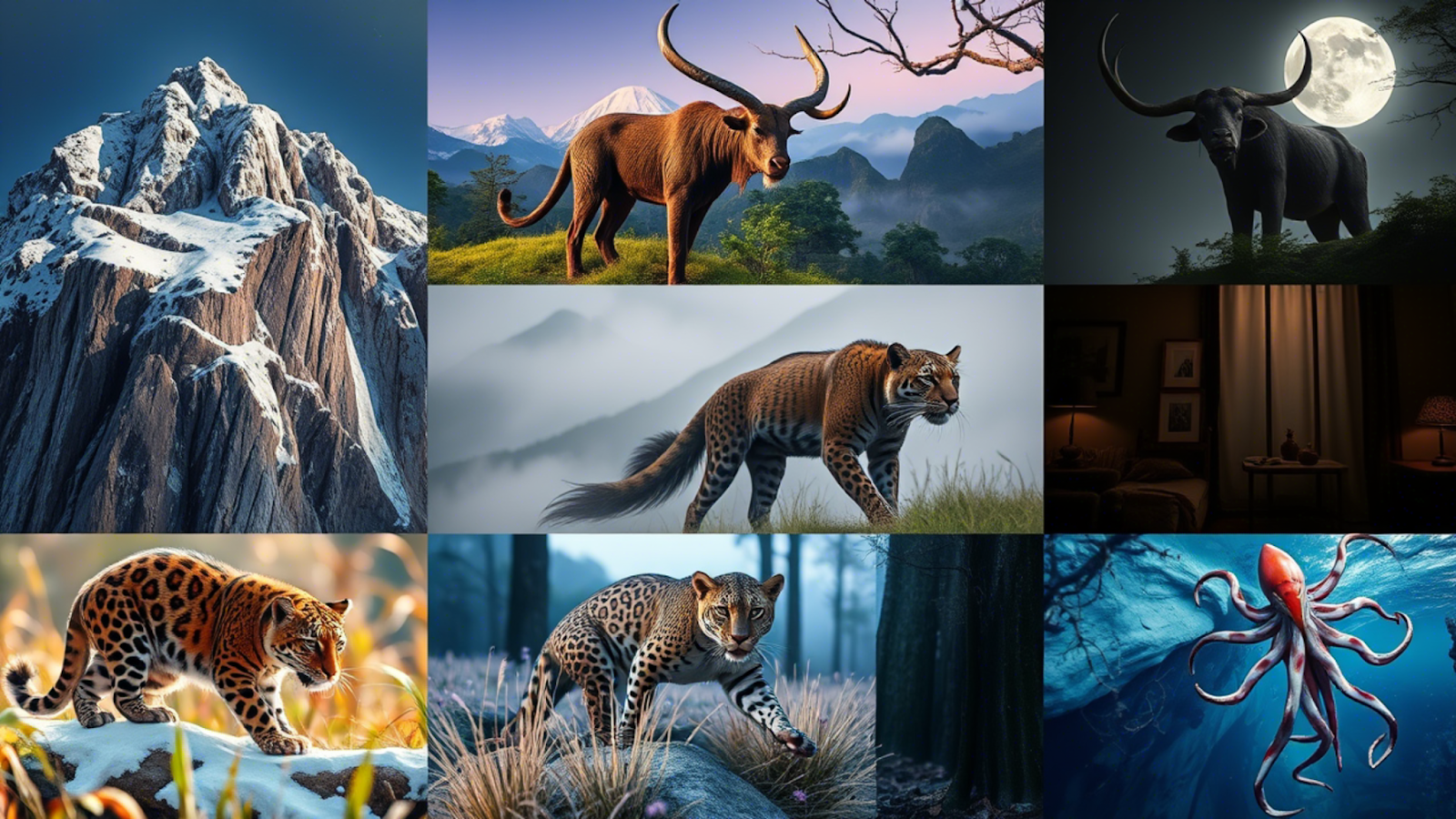
Wildlife photography is an exhilarating pursuit that tests patience, skill, and perseverance. For those dedicated to capturing wild photography photos, few challenges compare to tracking the planet’s most elusive creatures. These animals are masters of camouflage, rare in number, or inhabit the most remote corners of the Earth—making them the ultimate subjects for adventurous photographers.
If you’re seeking the thrill of documenting nature’s best-hidden wonders, here are seven of the world’s most elusive animals that will push your wildlife photography skills to the limit.
1. The Ghost of the Mountains: Snow Leopard (Panthera uncia)
Habitat
High-altitude ranges of Central Asia
Few animals embody elusiveness like the snow leopard. Roaming the steep, rocky cliffs of the Himalayas, this majestic big cat moves like a shadow, its pale grey coat blending seamlessly into the snow and stone. With fewer than 6,500 left in the wild, spotting one requires extreme patience—often weeks or even months of waiting in sub-zero temperatures.
Why It’s a Challenge
- Masters of stealth, they avoid human contact at all costs.
- Their vast, rugged territory makes tracking nearly impossible.
- Most sightings occur at dawn or dusk, demanding perfect timing.
For wildlife photographers, capturing a crisp, well-composed wild photography photo of a snow leopard is a career-defining achievement.
2. The African Unicorn: Okapi (Okapia johnstoni)
Habitat
Dense rainforests of the Democratic Republic of Congo
Resembling a cross between a zebra and a giraffe, the okapi is one of the most mysterious mammals on Earth. Despite its striking stripes, it remains hidden in the deep, dark jungles of Central Africa. Political instability and habitat loss have made encounters even rarer.
Why It’s a Challenge
- Extremely shy and sensitive to human presence.
- Lives in nearly inaccessible, conflict-prone regions.
- Mostly active at night, requiring specialized low-light equipment.
Only a handful of photographers have ever captured clear images of this enigmatic creature.
3. The Asian Unicorn: Saola (Pseudoryx nghetinhensis)
Habitat
Annamite Mountains (Vietnam & Laos)
Discovered in 1992, the saola is so rare that scientists have barely studied it. With its long, elegant horns and deer-like appearance, it’s often called the “Asian unicorn.” Fewer than 100 individuals may remain, and no confirmed sightings have occurred in years.
4. Why It’s a Challenge
- Critically endangered, with almost no known living specimens.
- Inhabits some of the most remote, unexplored forests.
- Nocturnal and highly secretive.
For wildlife photographers, even finding evidence of a saola—let alone photographing one—would be a historic achievement.
5. The Phantom of the Amazon: Jaguar (Panthera onca)
Habitat
Amazon rainforest & Central American jungles
Unlike African lions, jaguars are solitary, stealthy, and prefer thick rainforests over open plains. Their rosette-patterned fur allows them to vanish into the shadows, making them nearly invisible to both prey and photographers.
6. Why It’s a Challenge
- Expert ambush predators that avoid human contact.
- Dense jungle terrain makes tracking difficult.
- Most active at dawn and dusk, requiring perfect timing.
Capturing a jaguar mid-hunt or resting on a riverbank is a dream shot for any wildlife photographer.
7. The World’s Most Trafficked Mammal: Pangolin (Family: Manidae)
Habitat
Forests & savannas of Africa and Asia
Pangolins are nocturnal, armored creatures that roll into an impenetrable ball when threatened. Their elusive nature, combined with rampant poaching, makes them one of the hardest animals to photograph in the wild.
Why It’s a Challenge
- Almost entirely nocturnal.
- Extremely sensitive to vibrations and human presence.
- Rapidly declining populations due to illegal wildlife trade.
Infrared and trail cameras are often the only way to document these scaly mammals.
8. The Rarest Big Cat: Amur Leopard (Panthera pardus orientalis)
Habitat
Russian Far East & Northeast China
With fewer than 100 left in the wild, the Amur leopard is the most endangered big cat on Earth. Its thick, spotted coat provides perfect camouflage in snowy forests, making sightings incredibly rare.
Why It’s a Challenge
- Survives in one of the harshest climates on Earth.
- Extremely low population density.
- Requires long expeditions in freezing conditions.
A single wild photography photo of this elusive cat can take years to obtain.
9. The Deep-Sea Phantom: Giant Squid (Architeuthis dux)
Habitat
Ocean depths (up to 3,000 feet)
Unlike land animals, the giant squid lives in the crushing darkness of the deep sea. Only a handful of images exist, mostly captured by deep-sea submersibles or lucky underwater photographers.
Why It’s a Challenge
- Lives in near-total darkness, beyond recreational diving limits.
- Rarely surfaces, and sightings are unpredictable.
- Requires specialized deep-sea photography equipment.
For marine wildlife photographers, this mythical creature remains the ultimate prize.
How to Improve Your Chances of Capturing Elusive Wildlife
Research Extensively
Study migration patterns, feeding habits, and peak activity times.
Use Advanced Gear
Telephoto lenses, motion-sensor cameras, and thermal imaging can help.
Practice Stealth & Patience
Move quietly, wear camouflage, and avoid sudden movements.
Respect Their Space
Never disturb an animal for the sake of a photo.
Final Thoughts
For wildlife photographers, the pursuit of elusive animals is more than just a hobby—it’s a passion that demands dedication, resilience, and respect for nature. Each of these seven species represents a unique challenge, testing both technical skill and mental endurance.
If you’re striving to capture breathtaking wild photography photos, remember: the most extraordinary images often come to those who wait.
For more information:- leadersmagazine